Practice
Pranayama
Breath as practice
Prana and Ayama
Pranayama is a core part of Ashtanga Yoga — a set of controlled breathing techniques. The word combines prana, the life force or vital energy, and ayama, meaning expansion or control. Together, they describe the conscious shaping of breath to regulate and strengthen the flow of prana through the body.
Achala Yoga Pranayama
Balance across body, mind, and spirit
Pranayama techniques range widely in complexity and purpose, but the aim within Achala Yoga is consistent: physical, mental, and spiritual balance.
Practitioners work to increase oxygen intake, calm the nervous system, and encourage genuine relaxation — which in turn tends to lower stress, sharpen focus, and heighten overall awareness.
A few well-known techniques
Some pranayama practices elongate the breath; others involve retention and careful manipulation of breath ratios.
Anulom Vilom
Alternate nostril breathing, used to balance and calm the nervous system.
Bhramari
The humming bee breath, known for its soothing, almost immediate calming effect.
Ujjayi
The victorious breath, often used to steady focus during meditation and yoga practice.
Pranayama is usually woven into a broader yoga or meditation session, and is best learned under the direct guidance of an experienced teacher — improper technique can cause real discomfort. Practised regularly and mindfully, it builds a genuine sense of well-being, improves respiratory health, and deepens one's connection to the inner self.
In practice
Pranayama at Achala Ashram
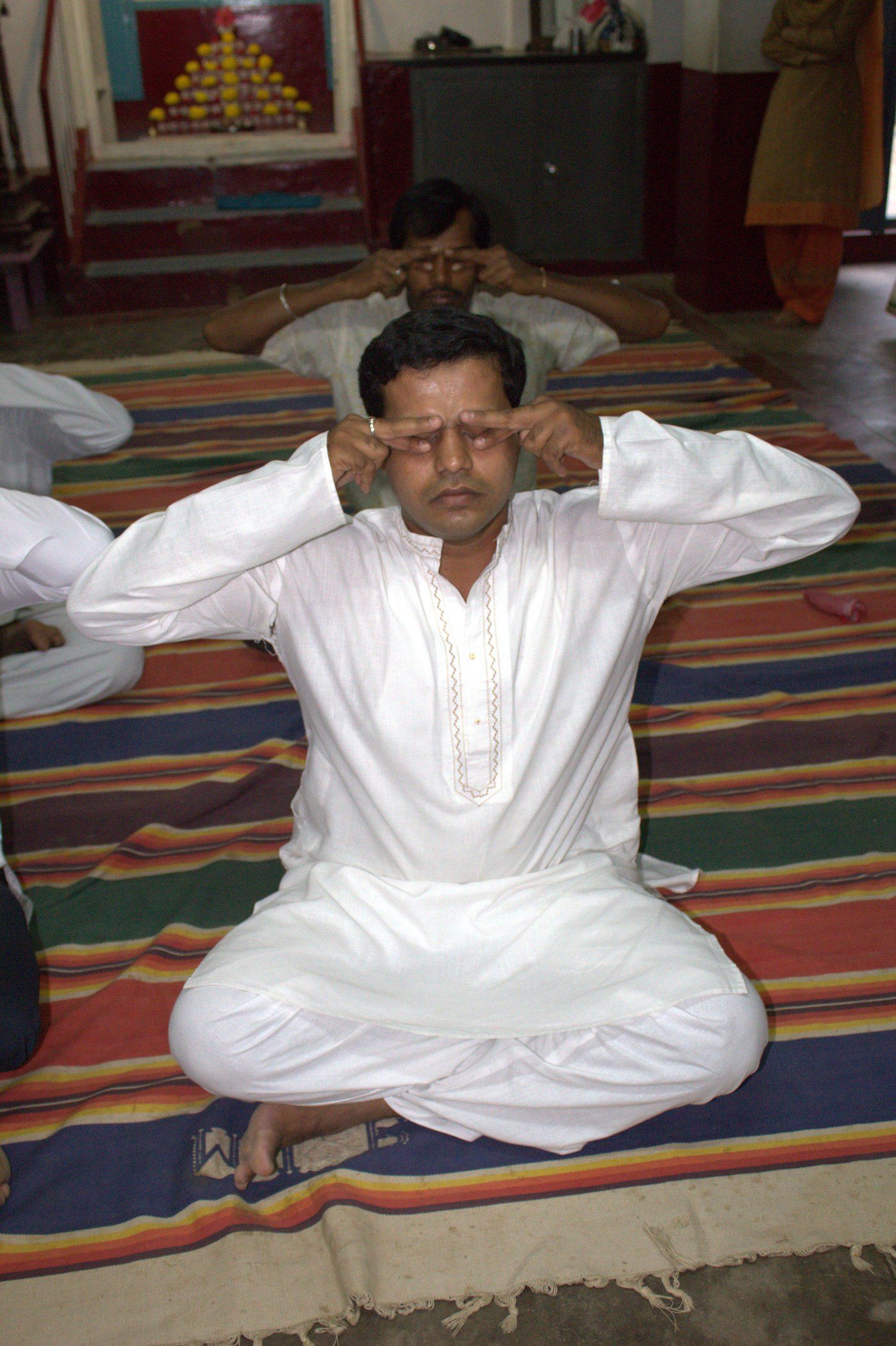
Sankhya Yoga practitioners at ashram working through Sankhya sadhana.
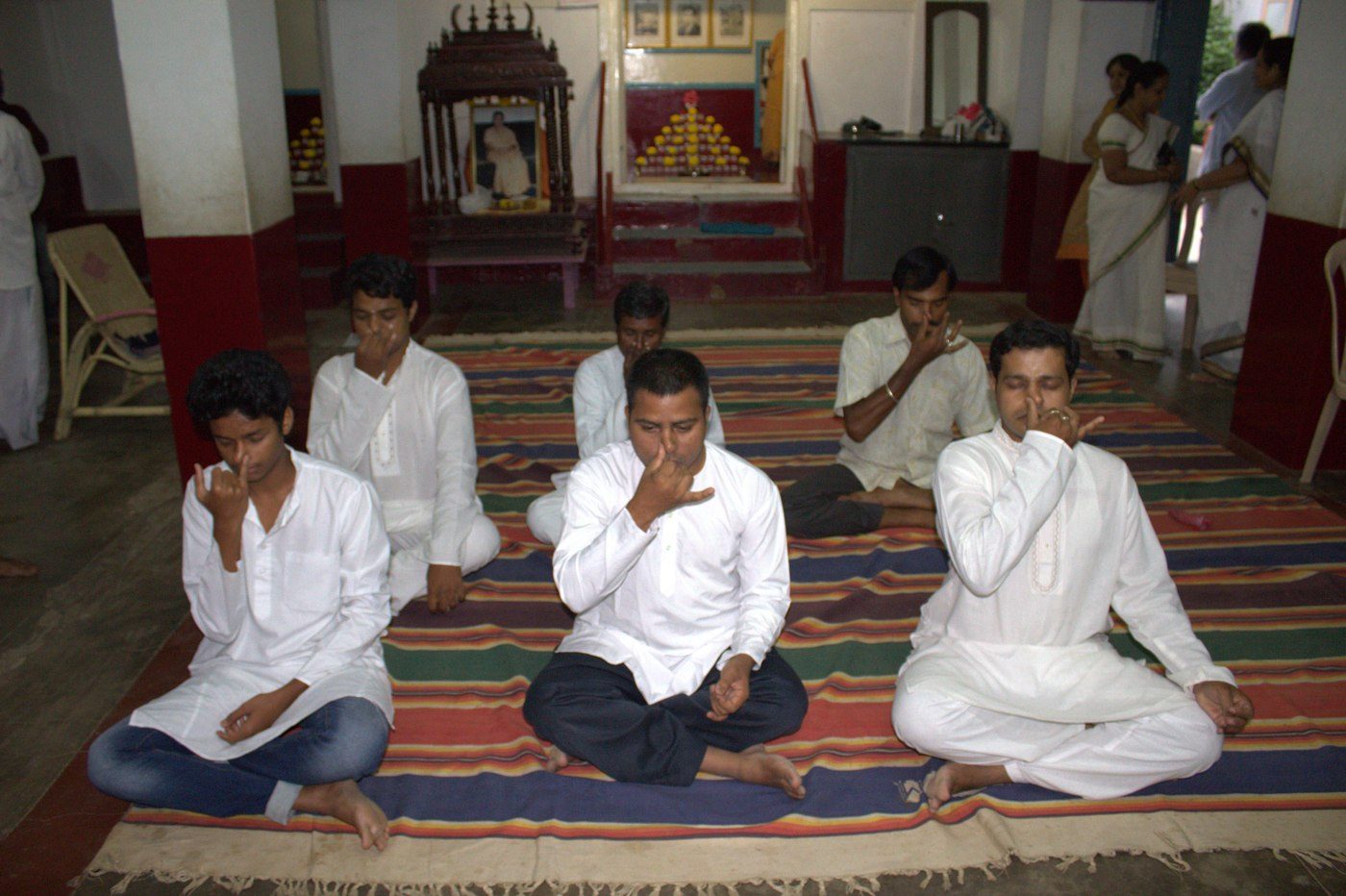
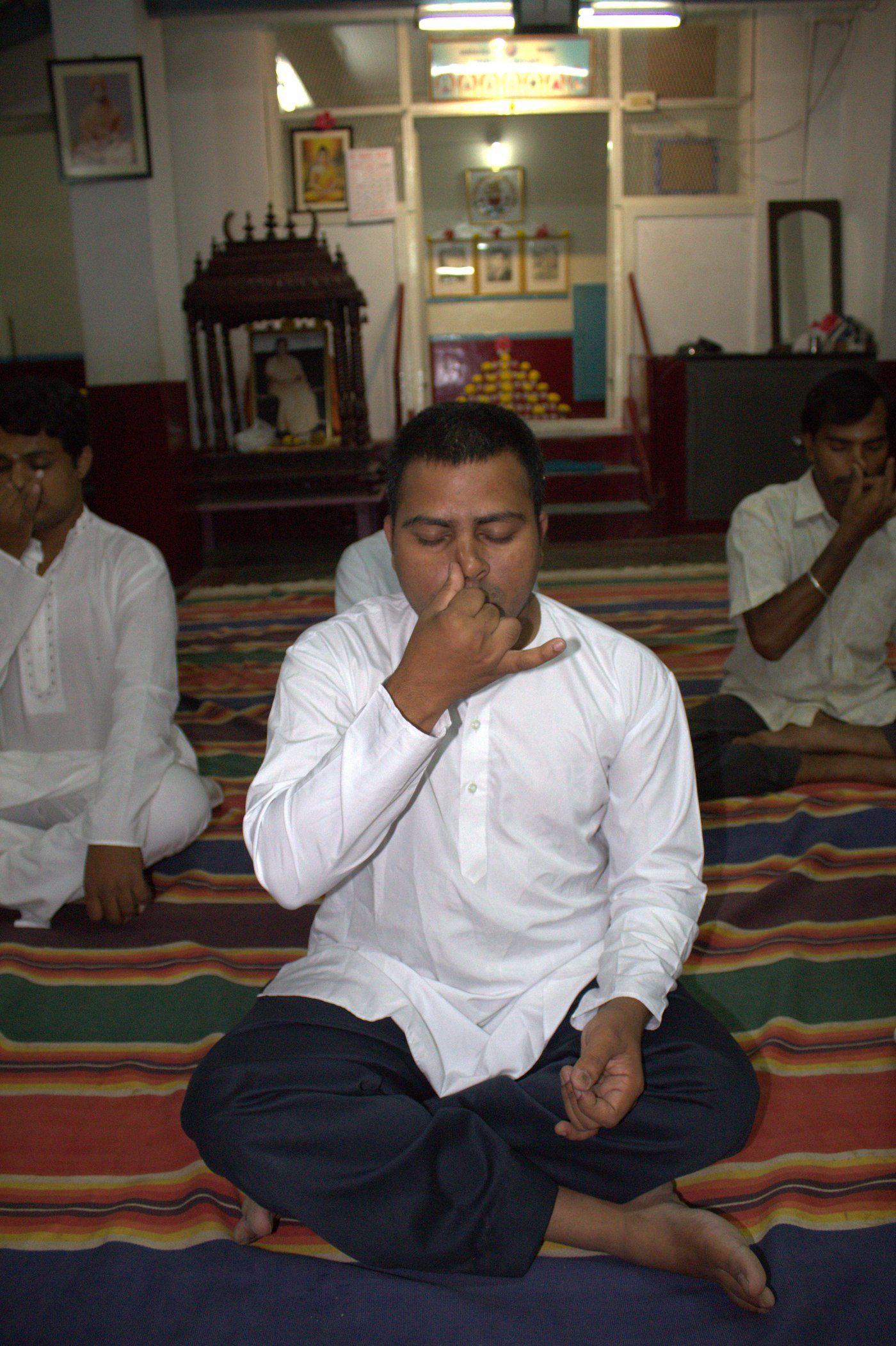
Sankhya Pranayama
Alternate nostril breathing, hand position and posture.