Practice
Meditation an act of
‘Silence’
The cornerstone
Stilling the mind's waves
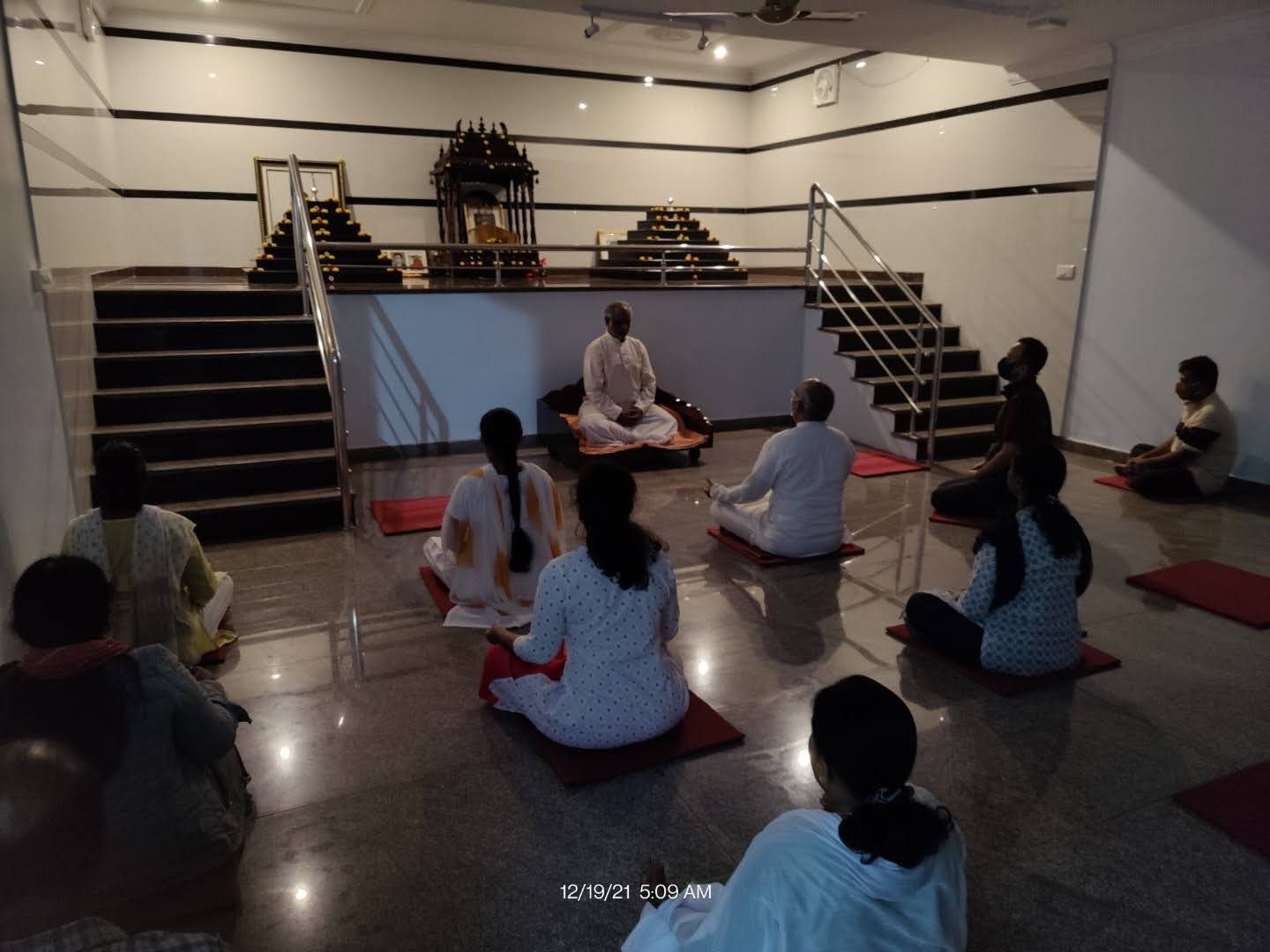
Dhyana is the practice at the very centre of spiritual growth — a gateway to deeper insight and a more settled awareness. Its purpose is simple to state and demanding to live: to still the restless waves of the mind, and rise toward a clearer state of consciousness. Traditions across the world revere it as the way past the confines of the ego, toward the deeper mysteries of existence.
In Achala Yoga
The bedrock of self-realisation
Within Achala Yoga, Dhyana holds a central place as the path toward self-realisation — not a merging with the divine, and not a journey toward any other realm, but a clear-eyed look at the true, ever-changing nature of Yeruka itself.
Its techniques are rooted in the Raja-Yoga tradition, unfolding across four stages that lead, in time, to Jnana Yoga: the state of ‘no mind.’
This is a genuine journey of self-exploration, one that becomes its own catalyst for personal growth — deepening a person's understanding of existence and bringing them into fuller alignment with the wider flow of life.
A closer look
Dhyana in Achala Siddhantha
In Achala Siddhantha, Dhyana is not merely concentration, visualisation, or devotion toward a deity or a heavenly state. It is a process of Vichara, self-inquiry, through which one observes and understands the nature of Yeruka. The seeker examines all experiences, thoughts, identities, emotions, and perceptions, and recognises that they arise within Yeruka and are therefore transient, changing, and non-eternal.
The purpose of Dhyana is not to attain something new, but to gain clarity regarding the impermanent nature of Yeruka and its creations. Through sustained inquiry, attachment to possessions, relationships, status, doctrines, rituals, merit, and even spiritual attainments gradually weakens. Dhyana culminates in a state of inner equanimity where actions continue naturally, but without possessiveness or expectation.
What liberation means here
Moksha in Achala Siddhantha
Moksha, according to Achala Siddhantha, is not the soul’s union with God, not entry into heaven, Kailasa, or Vaikuntha, and not a journey to another world after death. Neither is it the transformation of the individual into Achala Paripoorna Brahman.
Moksha is the complete cessation of bondage born from identification with Yeruka and its manifestations. When one directly realises that all experiences, distinctions, and values belong only to the changing domain of Yeruka, attachment and aversion lose their hold. The individual continues to live and perform actions, but as a trustee rather than an owner, without expectation of reward.
Such a person transcends the opposites of gain and loss, virtue and sin, heaven and hell, pleasure and pain, dharma and adharma. This freedom while living is called Jeevan Mukti. In Achala Siddhantha, therefore, Moksha is not an event that occurs after death; it is a state of abiding freedom attained through right understanding, inquiry, and the recognition of the transient nature of Yeruka, while Achala Paripoorna Brahman remains ever untouched, ever complete, and ever still.
Understand Achala Paripoorna BrahmanHow it is taught
Learned directly, not from a book
Like every meditation technique in this tradition, Dhyana is taught personally, by a Guru, and cannot really be picked up from written instruction alone. The full sequence of initiations — from the first cleansing practice through to the deepest stages of stillness — is laid out on the Spiritual Courses page.
View the Meditation Courses